
Polyvagal Theory Application
Nervous system regulation through safety and connection
How it works
What it is
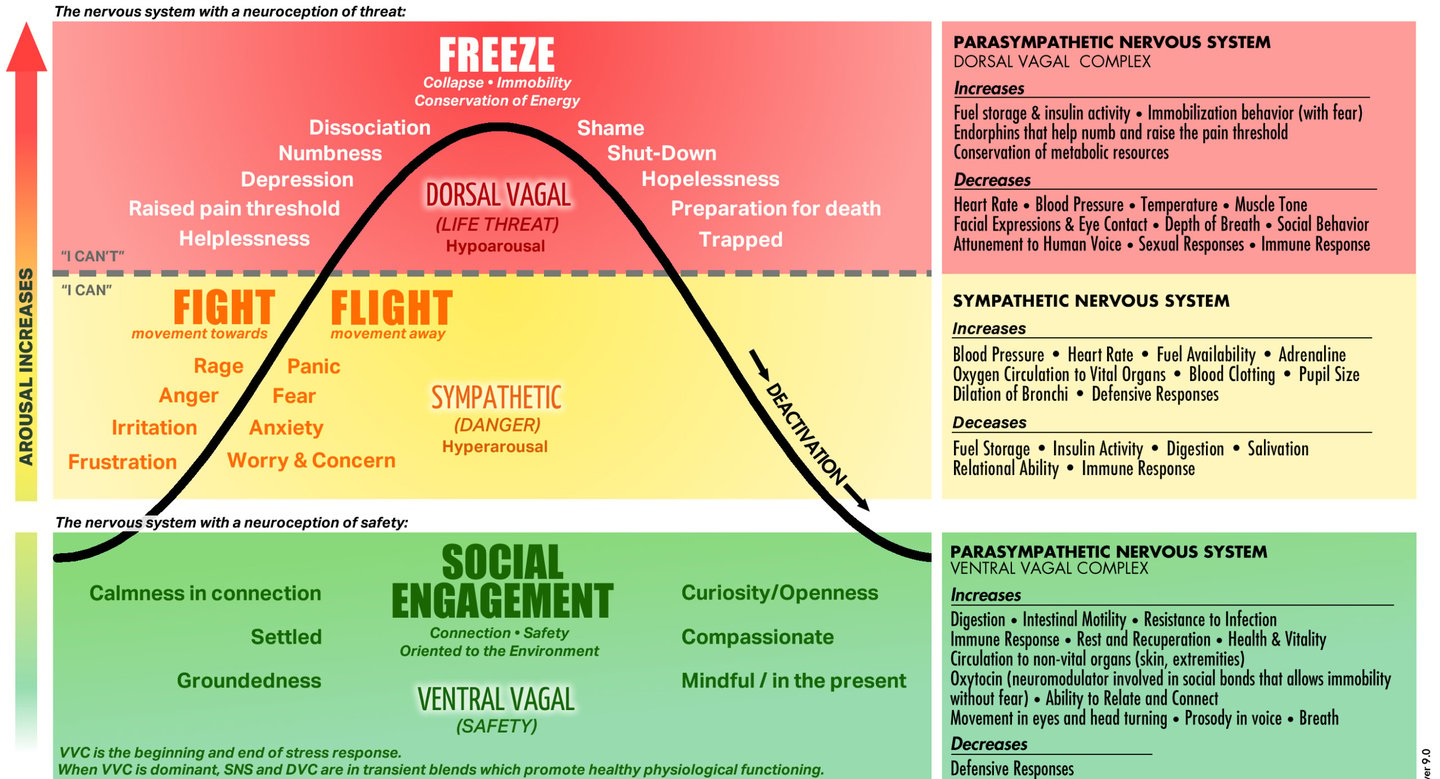
Developed by neuroscientist Dr Stephen Porges, Polyvagal Theory describes how the autonomic nervous system - particularly the vagus nerve - governs our responses to safety, danger, and life threat. It explains why trauma, chronic stress, and anxiety manifest as physical and emotional dysregulation. It also explains how health and well-being are restored through authentic connections with other people and how to increase productivity and well-being.
The crucial insight Porges introduced is the concept of neuroception — the body's unconscious scanning of the environment for safety or threat, happening beneath conscious awareness. A person can know intellectually that they are safe and still have a nervous system screaming that they are not. This is why talk therapy alone has limits for trauma: the thinking brain and the survival brain are operating on different timescales.
Therapeutic approaches informed by Polyvagal Theory help clients recognise their nervous system states (safe/social, fight-or-flight, shut-down) and build capacity to move between them. Techniques include breathwork, body-based awareness, titrated trauma processing, and co-regulation. Polyvagal theory is deeply relevant for any healing work. Effective healing, through this lens, means helping a person's nervous system learn that it is safe — not just convincing their mind. This is why approaches like somatic work, breathwork, sound, co-regulation (being in the presence of a regulated nervous system), and body-based touch can reach places that cognitive approaches cannot.
Sessions
Sessions can be done in person or on Zoom. A single session lasts 60 minutes. To experience results, it usually takes three to four sessions. In some cases, results are immediate after the first session. For chronic conditions, it could take more time.
To book a session, please reach out via Whatsapp or fill in the form by clicking on the button below.
What it helps with
Application of Polyvagal Theory helps with but is not limited to: chronic stress, complex trauma, dissociation, burnout, chronic pain, emotional dysregulation, social withdrawal, hypervigilance.